
BAltimore, MD - Jan. 3, 2018 - On Monday morning, January 1, 14 Teves 5778, when many non-Jews were using the legal holiday as a respite to recover from the previous night’s festivities, Kollel Nachlas HaTorah of Congregation Machzikei Torah held a special program for all Jewish men interested in utilizing the day to increase their limud haTorah.
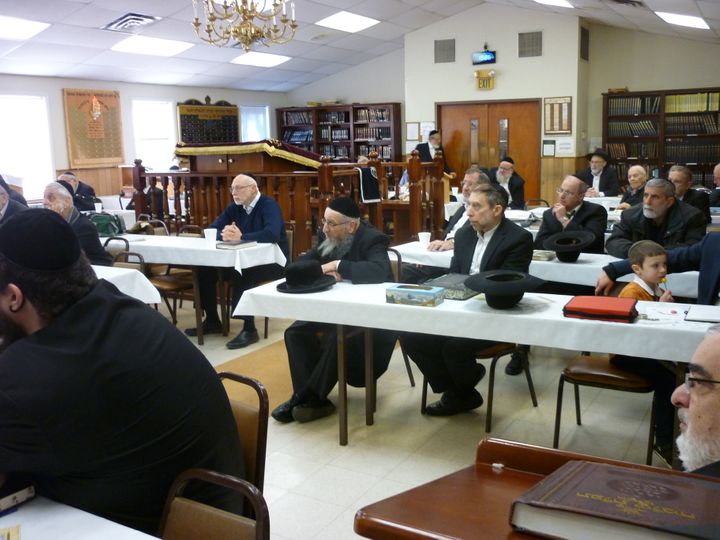
The program began with a shiur by the Rosh Kollel of Nachlas HaTorah, HaRav Nechemiah Goldstein. Rabbi Goldstein discussed the halachos of chukas hagoyim and the implications for behavior on non-Jewish holidays. The Torah tells us bechukoseihem lo teleichu, and from this posuk chazal have derived many restrictions on the way we may behave, in order that we do not imitate umos haolam. These restrictions do not extend to things that are based on reason, such as uniforms or professional attire universally worn by doctors. Regarding refuah, there is no issur in principle of chukas hagoyim, but there is a dispute whether one is permitted to use only methods which have been determined definitively to work (boduk umenusah), or also methods which have not been shown not to work. He also addressed the issue of gifts to gentiles around the time of their holidays and how to greet and respond to them.
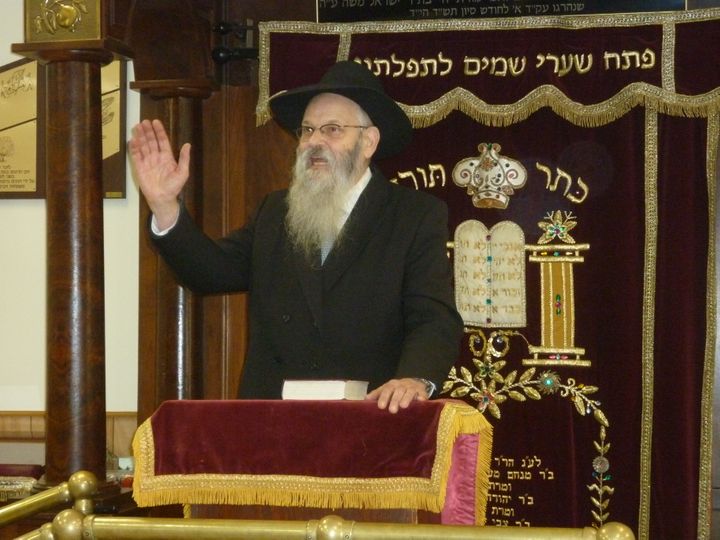
The large and attentive crowd at the Kollel was then addressed by Rav Beryl Weisbord, Masgiach Ruchani of Ner Yisroel. He discussed the difference between Jews and gentiles, and why we observe Rosh Hashana so differently than the way they celebrate the secular new year. Rabbi Weisbord explained that whereas am Yisroel accepted the Torah unconditionally as the command of Hashem, the umos haolam first asked what was in it to see if it was compatible with their personal desires. Therefore, while we precede Rosh Hashana with a month of focus on teshuva to keep us on the right track, among the goyim there is much discussion of new year’s resolutions, they are generally regarded as destined to fail, and the way of resolving the contradiction is to party and get drunk. The Masgiach quoted the novel approach of Seforno on Parshas Shemos, who says that after the death of the original 70 who came down to Mitzrayim, their descendents turned to derech sheratzim, so that Pharaoh could not believe they were related to Yosef Hatzaddik, and he wanted to expel them before they outnumbered the native Egyptians. He says that he tried to get them to leave by adopting antisemitic laws and taxes, but the Jews submitted because they wanted to stay in Mitzrayim. Only then did he enslave them. The lesson is that we must not be swayed by the surrounding culture because the Torah is emes and the world is full of sheker.
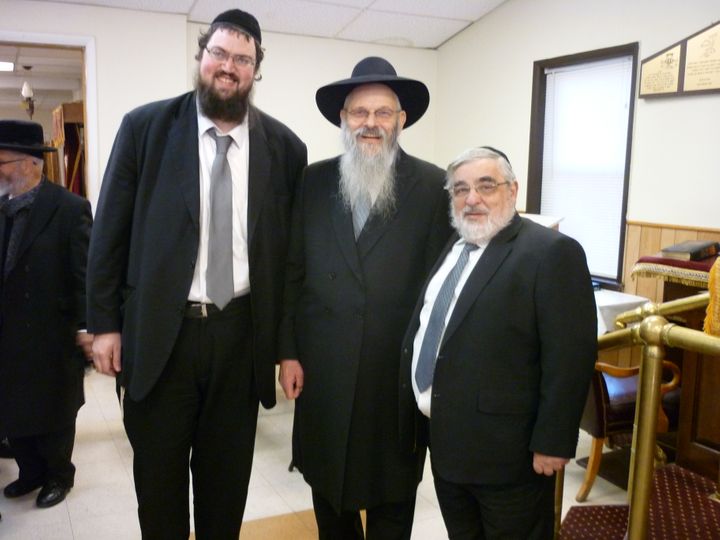
The Kollel provides an opportunity to men of all ages who have time available in the morning which they would like to engage in the most valuable endeavor – advancing their Torah knowledge in a structured way. It is particularly suitable for men who are retired, between jobs or have flexible schedules. The Kollel’s well-structured program runs from 9:30 a.m. to 12:00 p.m. every day from Monday through Friday, following Machzikei Torah’s 8:30 Shacharis, with generous refreshments available.
For more information, please contact Rabbi Nechemiah Goldstein at 410-358-1019 or Rabbi Yitzchok Neger at 443-803-0580.
Photo credit: Dave Weintraub