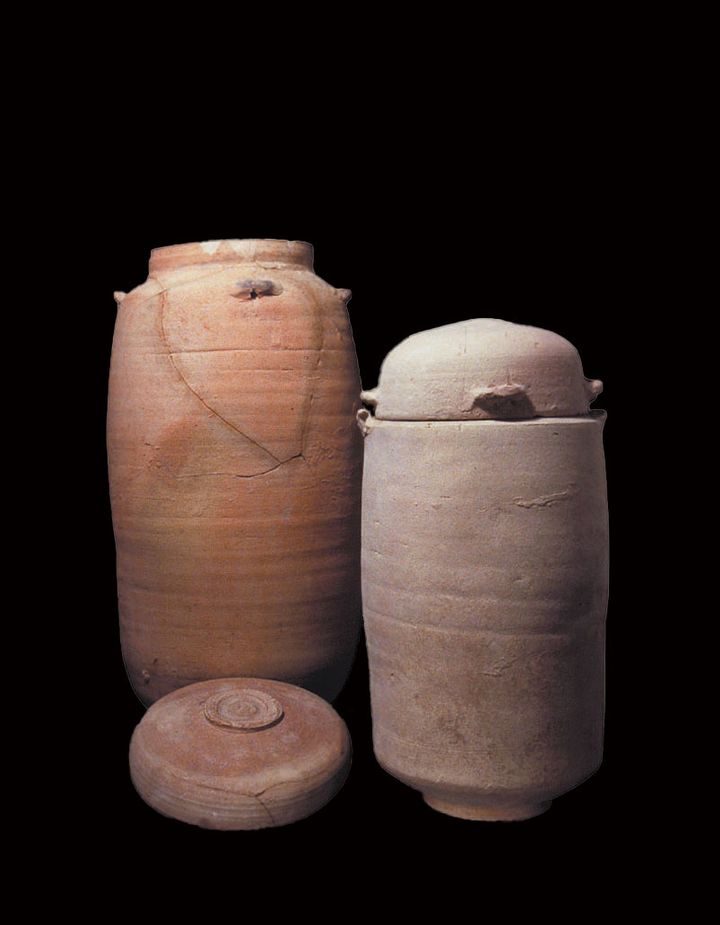
Decoded ancient DNA extracted from Dead Sea Scrolls parchments allows rare, an unanticipated glimpse into the world of Second Temple Judaism
The ground-breaking findings, spearheaded by researchers at Tel Aviv University, in collaboration with Uppsala University and the Israel Antiquities Authority, will be published as the cover story in the journal Cell.
- The genetic relationships of different Dead Sea Scrolls fragments reveal that the Scrolls reflect the broad cultural milieu of Second Temple Judaism, not only the spiritual world of the extremist and secluded Qumran sect.
- The results indicate that 2,000 years ago, Jewish society was open to parallel circulation of diverse versions of scriptural books. The findings support the notion that for contemporaries, the most important aspects of the scriptural text were it's content and meaning, not its precise wording and orthography.
- Genetic tracing (“fingerprinting”) of the divergent sheep from which the skin-made scrolls were made offers new insight into ancient Jewish mysticism and its dissemination.
An interdisciplinary team from Tel Aviv University, led by Prof. Oded Rechavi of TAU’s George S. Wise Faculty of Life Sciences, Prof. Noam Mizrahi of TAU’s Department of Biblical Studies, in collaboration with Prof. Mattias Jakobsson of Uppsala University in Sweden, the Israel Antiquities Authority, Pnina Shor and Beatriz Riestra, Prof. Dorothee Huchon-Pupko of TAU’s George S. Wise Faculty of Life Sciences and Prof. Christopher E. Mason of Weill Cornell Medicine, has successfully decoded ancient DNA extracted from the animal skins on which the Dead Sea Scrolls were written. By characterizing the genetic relationships between different scrolls fragments, the researchers were able to discern important historical connections.
The research, conducted over seven years, is published as the cover story in the journal Cell and sheds new light on the Dead Sea Scrolls.
“There are many scrolls fragments that we don’t know how to connect, and if we connect wrong pieces together it can change dramatically the interpretation of any scroll. Assuming that fragments that are made from the same sheep belong to the same Scroll,” explains Prof. Rechavi, “it is like piecing together parts of a puzzle.”
The Dead Sea Scrolls refers to some 25,000 fragments of leather and papyrus discovered as early as 1947, mostly in the Qumran caves but also in other sites located in the Judean Desert. Among other things, the Scrolls contain the oldest copies of biblical texts. Since their discovery, scholars have faced the challenge of classifying the fragments and piecing them together into the remains of some 1,000 manuscripts, which were hidden in the caves before the destruction of the Bayis Sheni in 70 CE. Today, the thousands of Dead Sea Scrolls fragments are preserved by the Israel Antiquities Authority, where their condition is monitored by advanced scientific methods, in a designated climate-controlled ambiance.
Researchers have long been puzzled as to the degree this collection of manuscripts, a veritable library from the Qumran caves, reflects the broad cultural milieu of Second Temple Judaism, or whether it should be regarded as the work of a radical sect (identified by most as the Essenes) discovered by chance.
"The Israel Antiquities Authority, in charge of preserving the Dead Sea Scrolls for posterity, seeks groundbreaking collaborations worldwide, to help maximize the knowledge about this most important discovery of the 20th century. The collaboration with TAU on ancient DNA joins the innovative toolbox of Dead Sea scrolls studies. We attempt to integrate present scientific and technological advances minimizing intervention while enhancing physical and textual research on the scrolls" explained Pnina Shor, founder of the Dead Sea Scrolls Unit at the Israel Antiquities Authority.
For the purpose of the research, the Dead Sea Scrolls Unit of the Israel Antiquities Authority supplied samples – sometimes only Scroll “dust” carefully removed from the uninscribed back of the fragments – and sent them for analysis by Prof. Rechavi’s team: Dr. Sarit Anava, Moran Neuhof, Dr. Hila Gingold and Or Sagi. To prevent DNA contamination, Dr. Anava traveled to Sweden to extract the DNA under the meticulous conditions required for ancient DNA analysis (e.g. wearing special full-body suits) in Prof. Jakobsson’s paleogenomics lab in Uppsala, which is equipped with cutting-edge equipment. To orthogonally validate the work on the animals’ ancient DNA, Prof. Mason’s lab in New York studied the scrolls’ microbial contaminants.
Prof. Jakobsson adds: "It is remarkable that we were able to retrieve enough authentic ancient animal DNA from some of these 2,000-year-old fragments considering the tough history of the animal hides. They were processed into parchment, used in a rough environment, left for two millennia, and then finally handled by humans again when they were rediscovered." Prof Mason notes: “Microbes are ubiquitous across the scrolls, whereas the ancient animal DNA carries unique molecular signatures that help reveal their associations.”
“Almost all the Scrolls we sampled were found to be made of sheepskin, and accordingly most of the effort was invested in the very challenging task of trying to piece together fragments made from the skin of particular sheep and to separate these from fragments written on skins of different sheep that also share an almost identical genome,” says Prof. Rechavi. “However, two samples were discovered to be made of cowhide, and these happen to belong to two different fragments taken from the Book of Jeremiah. In the past, one of the cow skin-made fragments was thought to belong to the same Scroll as another fragment that we found to be made of sheepskin. The mismatch now officially disproves this theory."
Shor concludes: “Such an interdisciplinary project is very important indeed. It advances Dead Sea Scrolls research into the 21st century and may answer questions that scholars have been debating with for decades. We consider the present project, which integrates both extractions of genetic information from the Scrolls using novel methods together with classical philological analysis, a very significant contribution to the study of the Scrolls.”
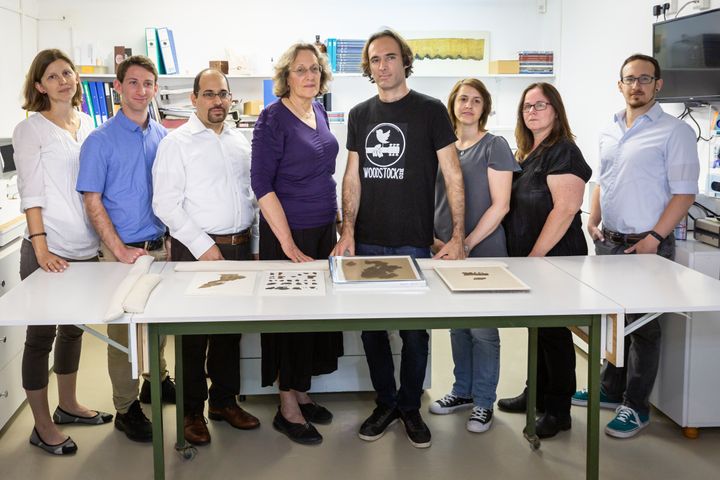
Tel Aviv University and Israel Antiquities Authority Research team. Credit: Tadmit, Courtesy of Tel Aviv University.
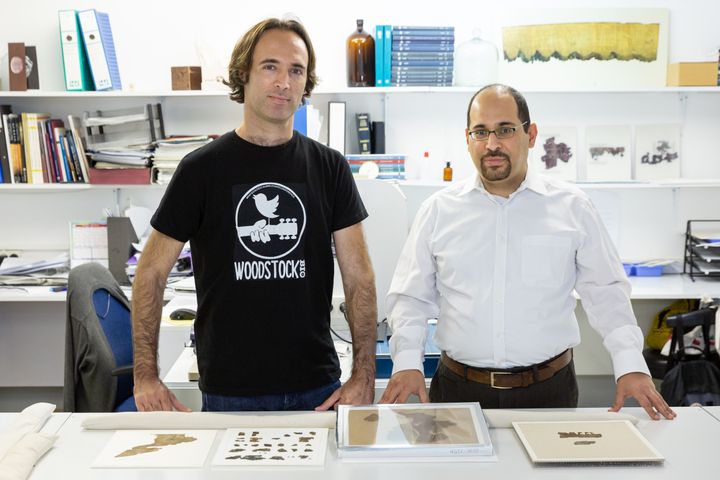
(Left to right): Prof. Oded Rechavi & Prof. Noam Mizrahi. Credit: Tadmit, Courtesy of Tel Aviv University.
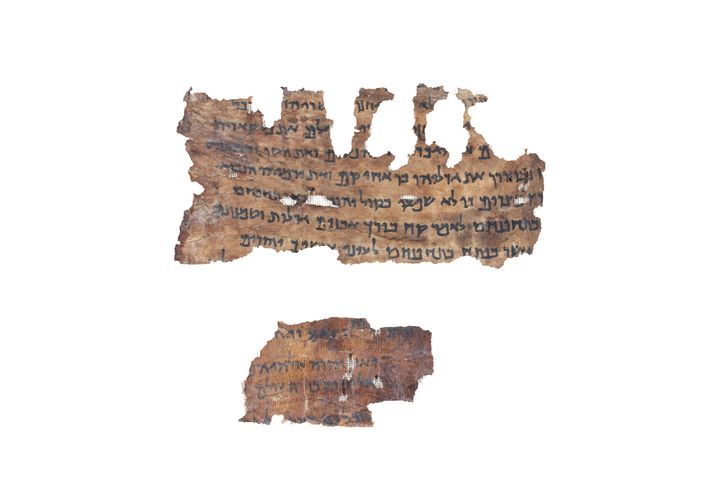
Jeramiah Scroll. Credit: Shai Halevi, Courtesy of the Israel Antiquities Authority.
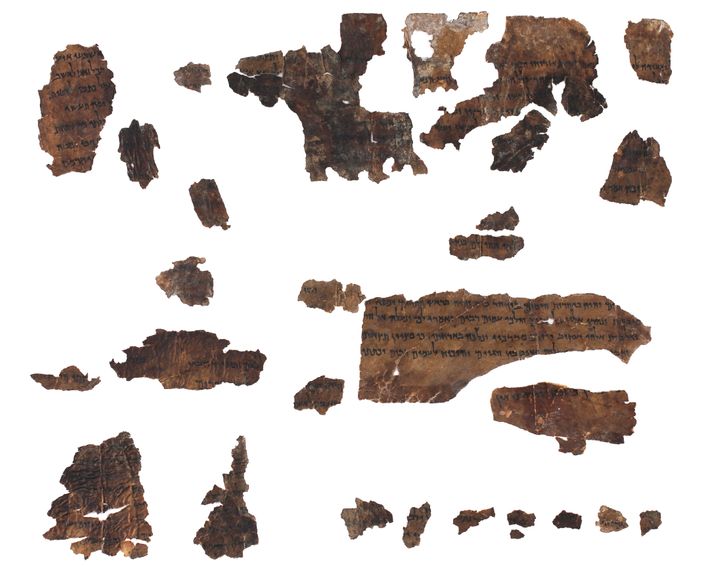
Isaiah Scroll. Credit: Shai Halevi, Courtesy of the Israel Antiquities Authority.
.JPG?width=720&watermark=&hash=Fto4mlcjrkqnyo-2PBJRcpmdpvCp0tg3gdSAe3_nb64)
Sampling DNA. Credit: Shai Halevi, Courtesy of the Israel Antiquities Authority.
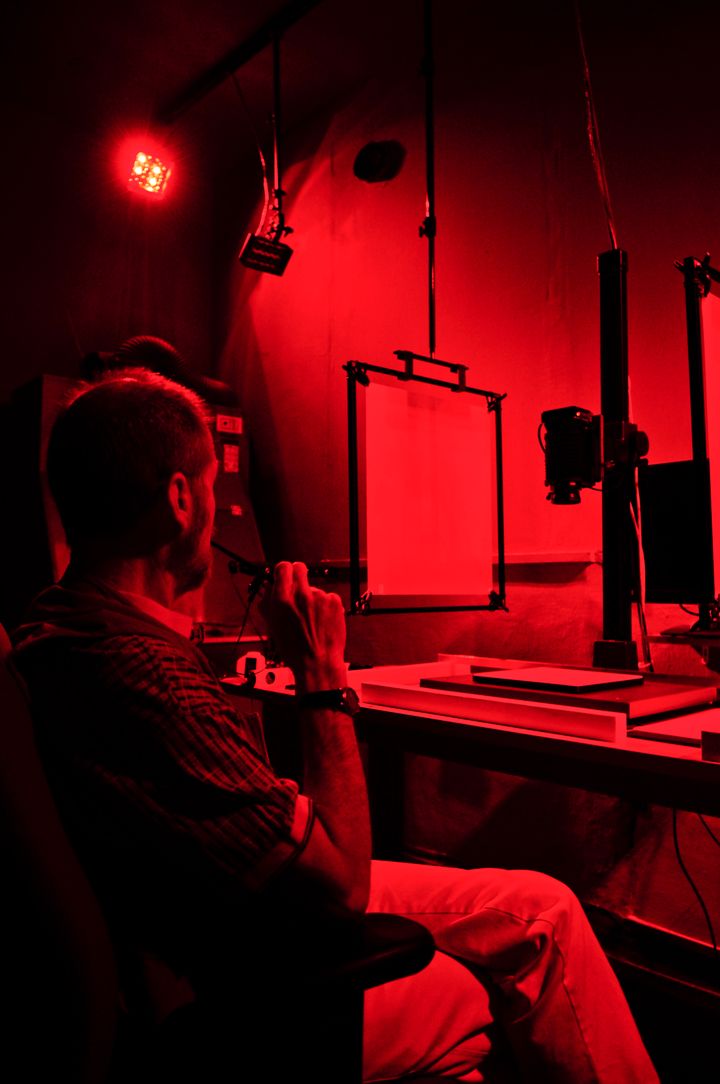
Imaging process of a scroll in the IAA lab. Credit: Shai Halevi, Courtesy of the Israel Antiquities Authority.
.jpg?width=720&watermark=&hash=_c4J2NiQw17Q1l_l7no3nFb2L26Oz2j_3cd5CdSNMuI)
Cave 4, Qumran. Credit: Shai Halevi, Courtesy of the Israel Antiquities Authority.