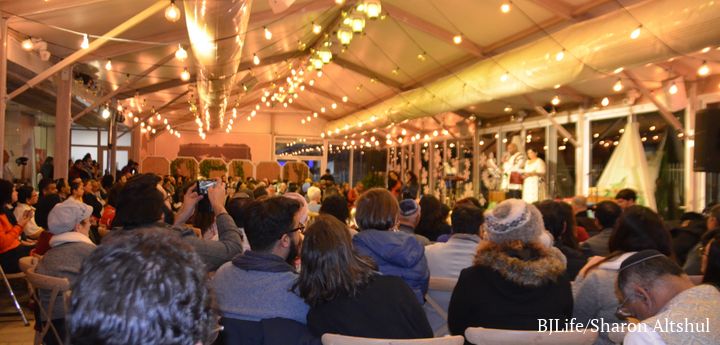
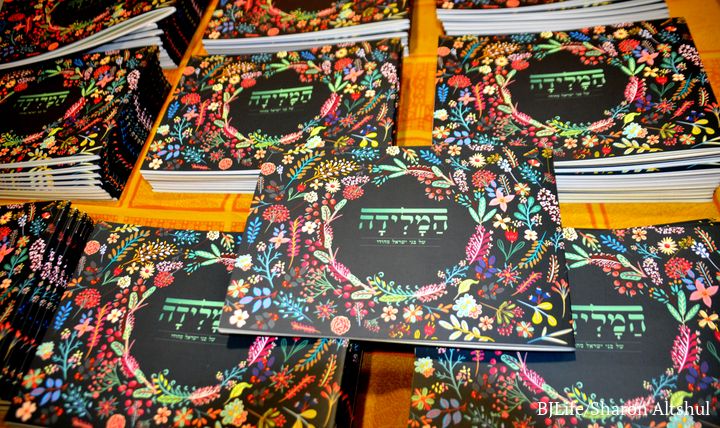
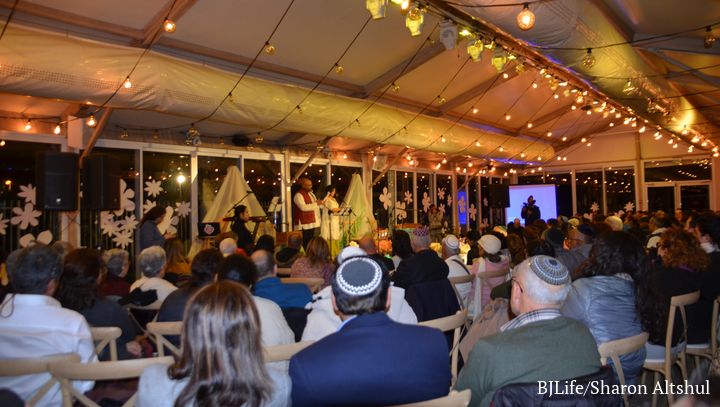
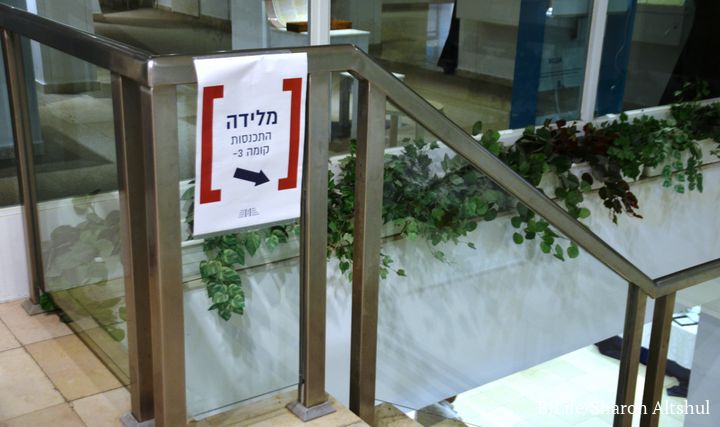
Jerusalem, Israel - Feb. 11, 2020 - For Tu B’Shvat 5780, together with the participation of the H.E Ambassador of India in Israel, Sanjeev Singla, for the first time, a ‘Malida Ceremony’ was held in Jerusalem, Israel, with its new status as an official national holiday on the Israeli Calendar.
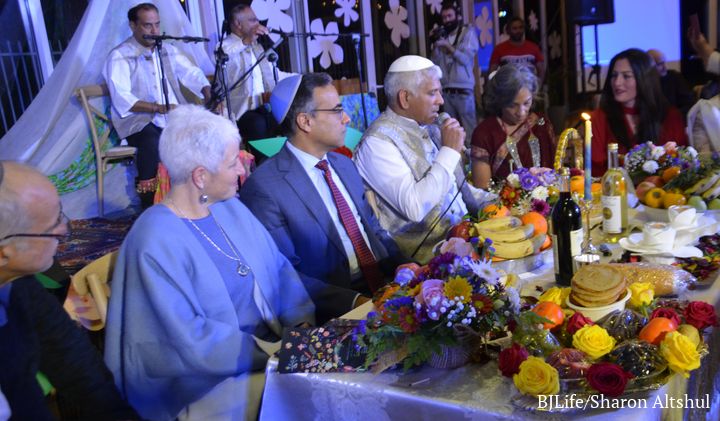
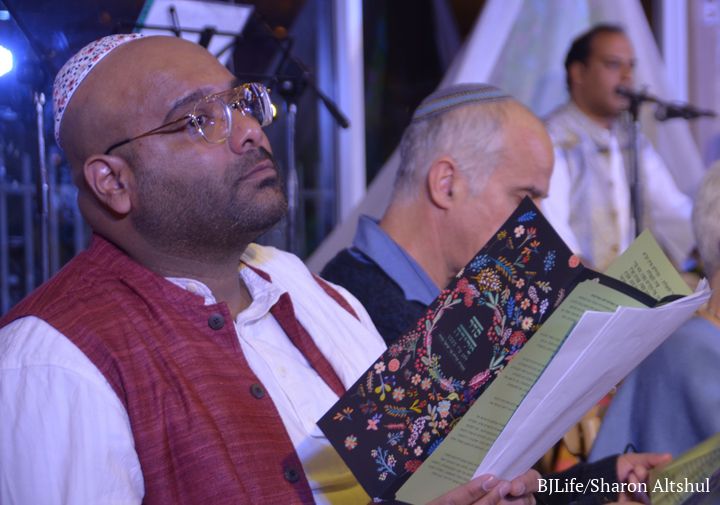
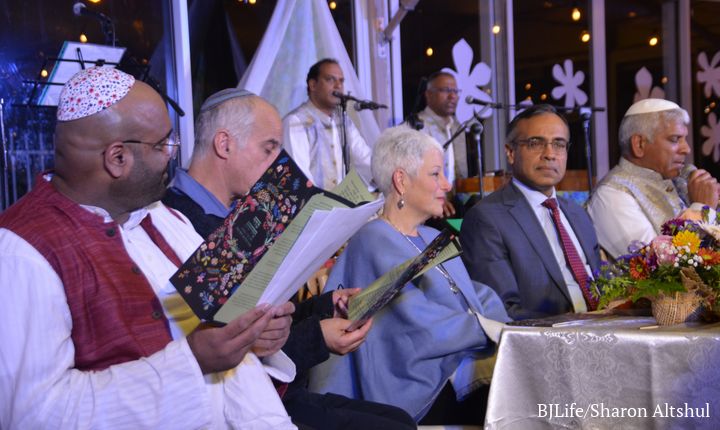
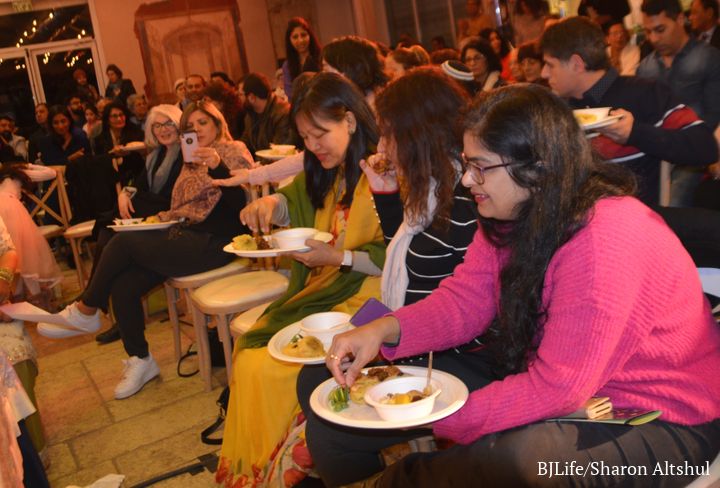
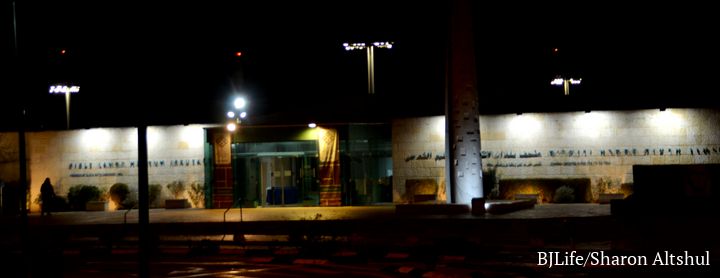
The Bible Lands Museum Jerusalem hosted the traditional event which was opened to the public with registration. BLMJ Director Amanda Weiss sat at the beautifully decorated flower and fruit-laden table as the seder Tu B'Shvat pesukim were chanted, beginning with Simon Tov and Mazel tov, and ending Shir HaMalos perek of Tehillim. A repeated refrain of Eliyahu HaNavi "במהרה יבוא אלינו עם משיח בן דוד" The Ambassador who is not Jewish wore a large blue kippa and spoke about how the Jewish community in India was able to be a part of Indian society and yet keep their uniqueness.
About the Malida Ceremony: Members of “The New Generation” community perform the Malida ceremony on several festive occasions, and especially on Tu B’Shvat. According to tradition, the community’s forefathers arrived in India in 175 BCE, exactly on Tu B’Shvat. Sadly, their ship sank off the coast of India, but seven men and seven women were saved from the catastrophe.
After they were saved, Eliyahu HaNavi appeared to them and promised that their offspring would once again settle in the Land of Israel, and until then, they would be integrated into the Indian subcontinent. In commemoration of the event, this community celebrates the Malida ceremony every Tu B’Shvat.
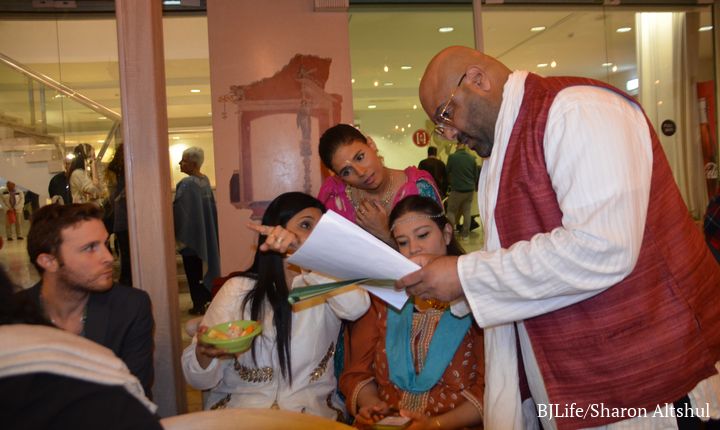
During the evening, discussion groups were held around the museum aimed to connect to museum exhibits that present the cultures and peoples mentioned in the Chumash, and offer a unique perspective on the birth of the nation of Israel amidst the lands and peoples that surrounded it.
The discussions focused on research linked to the Malida holiday, its connection to Tu B’Shvat, Eliyahu HaNavi, songs, hymns, and stories of the Children of Israel in India. Integrating into Israeli society, yet educating the new generations of traditional customs from old countries is a challenge faced by olim.
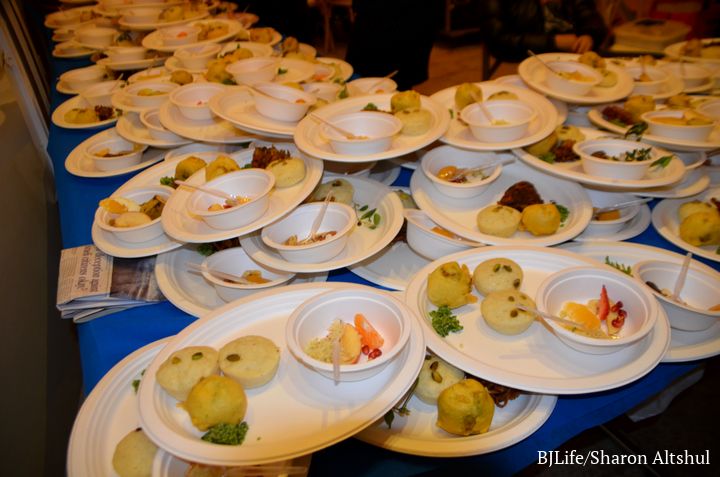
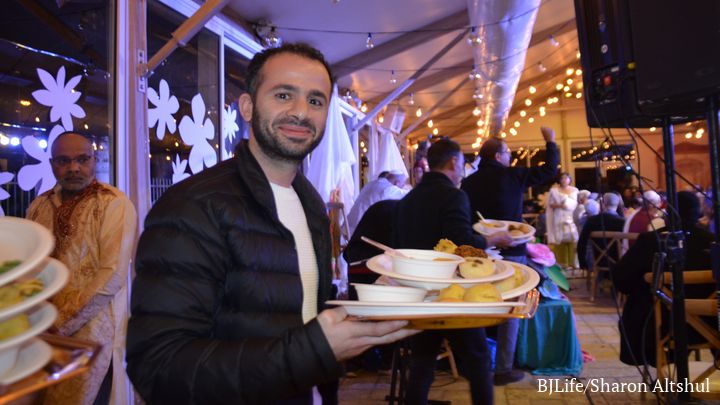
Music and traditional foods were important elements of the event produced by HaDor HaChadash, “The New Generation” of Indians in Israel, in cooperation with the Bible Lands Museum Jerusalem, the Embassy of India in Israel, the Indian Jewish Heritage Center (IJHC), Yeshiva Mizrachit, and the Hebrew Calendar Project.